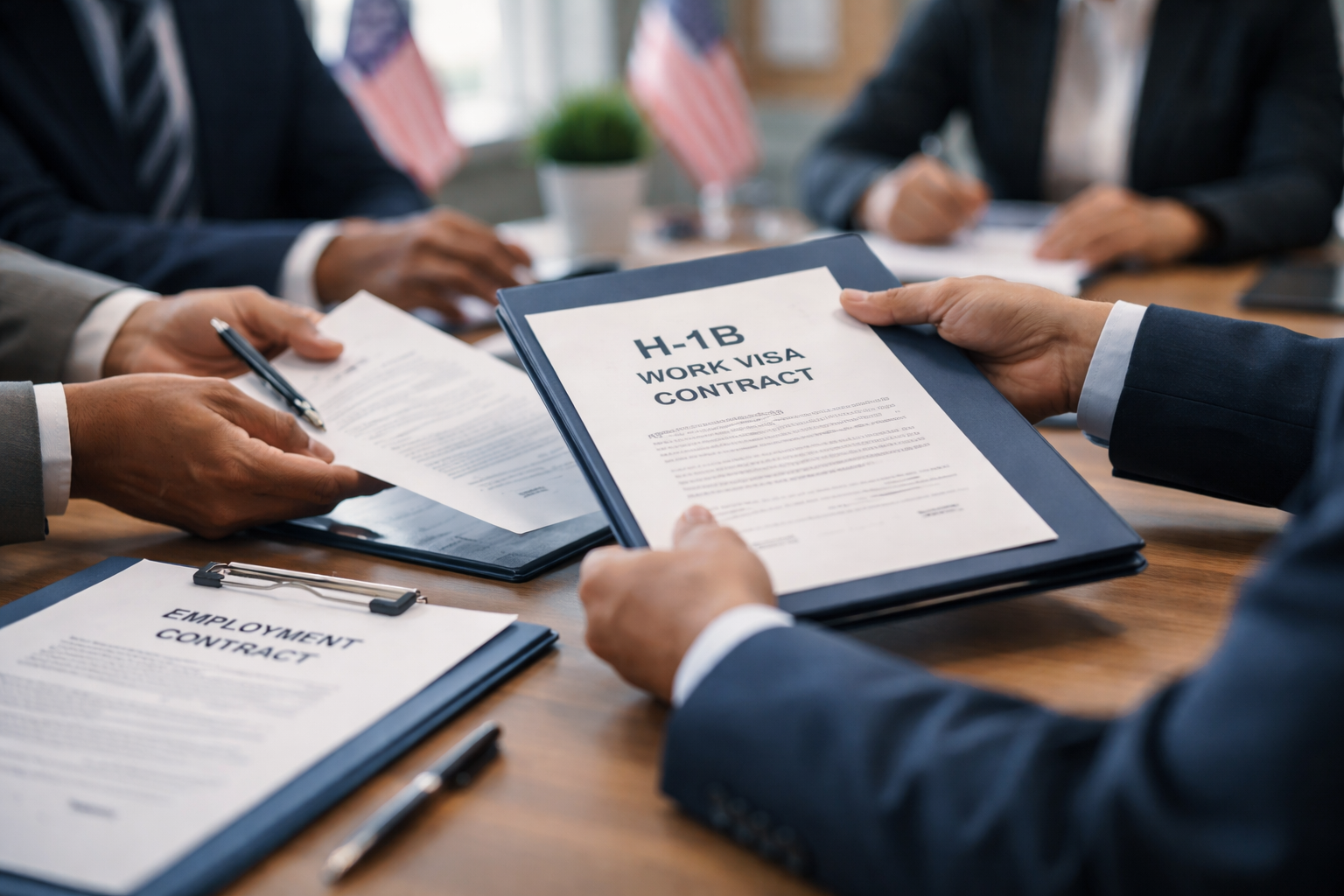
Protecting Texas workers while preserving lawful, high-skill immigration by raising standards, enforcing the rules, and stopping visa abuse that undermines wages and opportunity.
Texas’ work visa system should strengthen the Texas workforce — not be used to replace it. High-skill immigration plays an important role in innovation, but weak oversight and loopholes in the H-1B program have allowed abuse that puts downward pressure on wages and sidelines qualified Texans.
This plan focuses on restoring balance by enforcing the rules, raising standards, and ensuring work visas are used only when skills are genuinely scarce.
The Issue
The H-1B visa program was created to address genuine skill shortages, but documented abuses have created real challenges for American tech workers — including displacement in some cases and wage pressure in parts of the IT sector.
Texas ranks among the top states for H-1B approvals, with 12,613 initial employment approvals in FY 2025, placing it second nationally.¹ When extensions and continuations are included, Texas consistently sees very high overall approval volumes, reflecting the state’s growing role as a national tech hub.²
In and around HD 106 — including Frisco, Prosper, and nearby employment centers — outsourcing practices have been reported where U.S. employees are required to train foreign replacements, echoing nationally documented cases involving major employers.³
At the same time, unemployment among recent college graduates (ages 22–27) remains elevated at approximately 5.3%, higher than the overall unemployment rate, with entry-level tech roles particularly affected amid economic uncertainty and rapid AI adoption.⁴
In response to widespread concern, the federal government implemented a $100,000 additional fee for certain new H-1B petitions, effective September 21, 2025, aimed at discouraging low-wage use of the program.⁵ While this has slowed some applications, the absence of state-level wage standards and consistent oversight still allows firms to undercut Texas talent, particularly in fast-growing North Texas corridors.
Supporting Argument
Recent federal reforms — including the $100,000 fee and a weighted selection process favoring higher-paid, higher-skill positions beginning with the FY 2027 cap season — represent meaningful progress toward protecting wages and prioritizing specialized roles.⁵⁶
However, Texas currently lacks comprehensive state-level auditing and transparency requirements, allowing continued reliance on OPT extensions and lottery-based hiring practices that critics argue remain vulnerable to abuse.
Legislative proposals such as the PAUSE Act of 2025 (H.R. 6225) reflect growing concern among federal lawmakers that structural weaknesses persist and warrant stronger corrective action.⁷
Without state involvement, risks remain. The absence of minimum wage standards tied to local labor markets can contribute to downward wage pressure in certain STEM fields, with studies showing mixed but notable impacts — including documented cases where H-1B wages fall below local medians.⁸ Over time, this discourages domestic talent development and weakens HD 106’s long-term competitiveness.
What I Support
Texas workers first — reform visas to protect, not replace.
- Establish higher wage thresholds for H-1B positions in high-demand fields to ensure visas are used only where skills are truly scarce
- Curb OPT and lottery-based abuses through stronger verification and enforcement
- Require state-level audits of employers linked to worker displacement, while safeguarding compliant H-4 spouses and families
- Prioritize American workers in tech hiring, supported by transparent reporting on visa impacts
- Support targeted federal pauses when necessary, while building Texas-specific worker protections


Why This Matters
When visa programs are misused, the consequences ripple through local communities. Engineers and IT professionals in Prosper and surrounding areas face increased job insecurity, while new graduates struggle to enter the workforce. Families feel the strain, and regional innovation suffers.
Balanced reform ensures Texas remains competitive without sacrificing its middle class or discouraging young Texans from pursuing high-skill careers.
Rick Abraham’s Approach
With hands-on IT experience, I will introduce the Texas Worker First Act to strengthen accountability and transparency in workforce hiring.
- Audit firms that rely heavily on foreign labor while displacing Texans
- Build coalitions with labor groups, educators, and industry to support fair wages
- Push back against lobby-driven policies that favor outsourcing over local talent
- Host town halls and workforce forums to help displaced workers retrain and reconnect to opportunity
Texas can welcome talent and protect its people — but only if we enforce the rules and put workers first.
Sources & Data
¹ National Foundation for American Policy (NFAP), H-1B Petitions and Denial Rates in FY 2025
https://nfap.com/research/new-nfap-policy-brief-h-1b-petitions-and-denial-rates-in-fy-2025/
² U.S. Citizenship and Immigration Services (USCIS), H-1B Employer Data Hub
https://www.uscis.gov/tools/reports-and-studies/h-1b-employer-data-hub
³ Case documentation on outsourcing and worker replacement (Disney and similar cases)
https://homepages.se.edu/cvonbergen/files/2020/12/The-Walt-Disney-Company_Employees-Are-Asked-to-Train-Their-Foreign-Replacements.pdf
⁴ Federal Reserve Bank of New York, Labor Market for Recent College Graduates
https://www.newyorkfed.org/research/college-labor-market
⁵ USCIS, H-1B Specialty Occupations – Fee and Policy Updates
https://www.uscis.gov/working-in-the-united-states/h-1b-specialty-occupations
⁶ Federal Register, Weighted Selection Process for H-1B Cap Registrations
https://www.federalregister.gov/documents/2025/12/29/2025-23853/weighted-selection-process-for-registrants-and-petitioners-seeking-to-file-cap-subject-h-1b
⁷ Congress.gov, H.R. 6225 – PAUSE Act of 2025
https://www.congress.gov/bill/119th-congress/house-bill/6225
⁸ Economic Policy Institute, New Evidence of Widespread Wage Theft in the H-1B Program
https://www.epi.org/publication/new-evidence-widespread-wage-theft-in-the-h-1b-program/ipsum dolor sit amet, consetetur sadipscing elitr.