
A firm, disciplined commitment to protect Texas land, water, and infrastructure from foreign control and hostile influence.
Texas has long welcomed growth and investment, but Texans never agreed to surrender control of their land, water, or critical infrastructure to foreign adversaries. In recent years, lawmakers have begun to recognize that large-scale foreign ownership—especially by entities linked to hostile governments—poses real risks to state sovereignty, public safety, and long-term economic stability.
In 2025, Texas took an important step forward with the passage of Senate Bill 17, restricting land ownership by designated foreign adversaries and closing loopholes left by earlier laws. While this reform improved oversight, enforcement gaps and indirect ownership structures remain. In fast-growing regions like North Texas and House District 106, protecting land and water resources requires vigilance, transparency, and a clear commitment that Texas assets remain under Texas control.
The Issue
Foreign ownership of U.S. land has increased significantly over the past two decades, with Texas ranking among the top states for foreign-held acreage. While not all foreign investment is harmful, ownership tied to hostile governments raises serious concerns—particularly near military installations, major transportation corridors, energy infrastructure, and critical water resources.
North Texas is not immune. Rapid growth, rising land values, and strategic assets such as Lake Lewisville, Ray Roberts Lake, agricultural land, and transportation corridors make Denton County an attractive target for foreign-linked investors operating through shell companies and complex partnerships. Weak disclosure requirements and limited enforcement make it difficult for state and local officials to identify who truly controls these properties.
While no single incident defines this risk in HD 106, rapid growth and strategic assets make prevention—not reaction—the responsible approach. Land ownership is not easily reversible. Once strategic assets are sold, the state’s ability to protect water access, food security, and public safety is permanently weakened.
Supporting Arguments
SB 17 strengthened Texas law by restricting land ownership by entities from countries designated as national security threats and by granting the governor authority to designate additional countries as risks emerge. The law prohibits ownership by foreign governments and foreign-controlled entities, requires divestment in certain circumstances, and increases scrutiny of leases and transactions involving sensitive assets. These reforms addressed clear vulnerabilities left by prior statutes.
However, enforcement remains uneven. Investigations into transactions near military bases and strategic infrastructure show that foreign-linked entities continue to test Texas law through indirect ownership, long-term leases, and complex corporate structures. Without stronger transparency requirements and consistent enforcement, restrictions risk becoming symbolic rather than effective.
While SB 17 is still in its early implementation phase, past experience with similar state and federal laws shows that enforcement gaps often emerge through opaque ownership and indirect control. Texas has both the authority and the responsibility to protect its land and resources. Allowing foreign influence over water supplies, farmland, or critical infrastructure undermines state sovereignty and places communities at long-term risk.
The core lesson is simple: today’s ally can become tomorrow’s adversary. Texas policy must be built on durable safeguards, not assumptions about permanent alignment or goodwill.
These protections apply to foreign governments, foreign-controlled entities, and nonimmigrant visa holders from any foreign state. They do not apply to U.S. citizens or lawful permanent residents, regardless of background or ethnicity.
What I Support
Texas must draw a clear and enforceable line: ownership of Texas land should be reserved for those with permanent legal ties to the United States. I support:
- A comprehensive ban on land ownership by foreign governments, foreign-controlled entities, and nonimmigrant visa holders from any foreign state
- Permitting only tightly regulated, revocable leases for foreign entities when required for limited commercial activity, subject to continuous review and immediate termination for violations
- Mandatory disclosure of beneficial ownership for all significant land transactions, including corporate and partnership structures
- Strong enforcement mechanisms, including forced divestment, lease termination, and criminal penalties for evasion or false disclosure
- A complete prohibition on tax incentives, subsidies, or public benefits for foreign governments, foreign corporations, or nonimmigrant visa holders
- Special statutory protections for critical Texas assets, including water reservoirs, agricultural land, military-adjacent property, and major infrastructure corridors—particularly in fast-growing regions like North Texas
Texas land is not a commodity for temporary or foreign control. It is a permanent asset tied to sovereignty, security, and the future of Texas families.Texas land is not a commodity for temporary or foreign control. It is a permanent asset tied to sovereignty, security, and the future of Texas families.
Why This Matters
Land is not just real estate—it is sovereignty. When foreign governments or temporary foreign interests gain control over farmland, water access, or infrastructure, Texans face higher costs, reduced security, and loss of local decision-making.
In House District 106, rapid growth and the presence of critical assets—including major reservoirs, agricultural land, and transportation corridors—make prevention essential. While no single incident defines this risk locally, waiting for a crisis before acting would be irresponsible. Once strategic land is sold or controlled indirectly, the damage is difficult—if not impossible—to reverse.
Protecting Texas land today preserves economic stability, public safety, and long-term self-governance for future generations.
Rick Abraham’s Approach
I approach this issue from a simple principle: permanent control of Texas land should be reserved for those with permanent legal ties to the United States. Land ownership is not a temporary privilege—it is a long-term responsibility tied to sovereignty, security, and stewardship.
As State Representative, I will work to strengthen and enforce Texas law so that foreign governments, foreign-controlled entities, and nonimmigrant visa holders cannot acquire permanent ownership of Texas land. I will support clear disclosure requirements, aggressive enforcement against evasion through shell companies or indirect ownership, and mandatory divestment when violations occur.
I will oppose tax incentives, subsidies, or public benefits that enable foreign or temporary control of Texas assets. I will also prioritize statutory protections for water resources, agricultural land, military-adjacent property, and major infrastructure corridors—especially in fast-growing regions like North Texas.
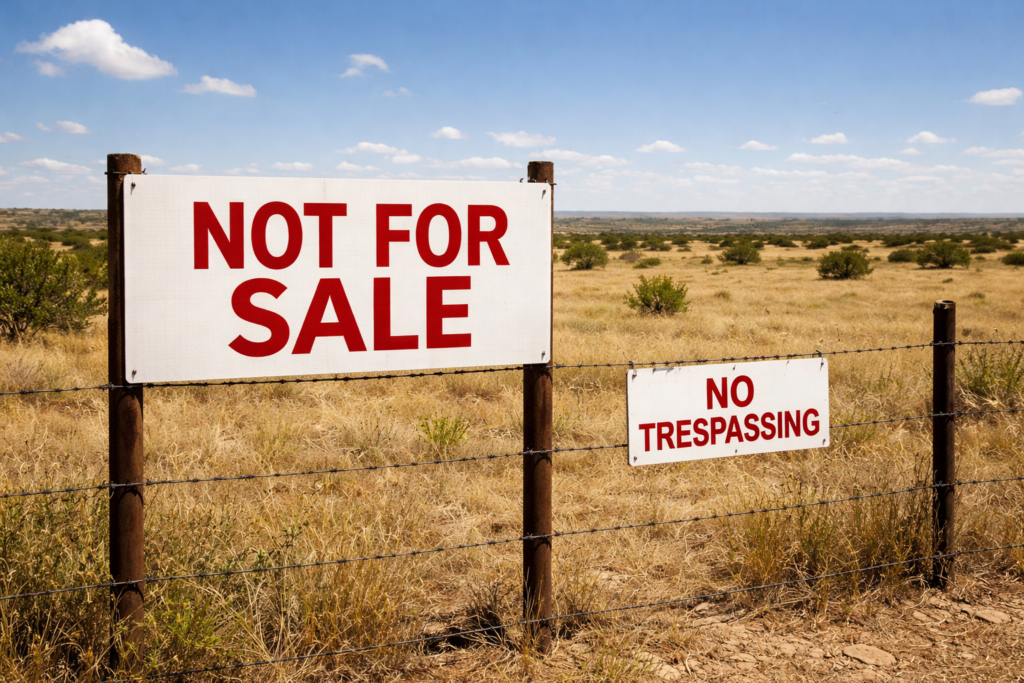
This approach is not about ethnicity or nationality. It is about permanence, accountability, and control. Texas must remain governed by those who live here permanently, invest here long-term, and share responsibility for its future. Texas is not for sale—and I will work to ensure it never is.
Sources & Data
Committee on Foreign Investment in the United States (CFIUS)
Federal oversight of foreign investments affecting national security.
https://home.treasury.gov/policy-issues/international/the-committee-on-foreign-investment-in-the-united-states-cfius
U.S. Department of Agriculture (USDA)
Foreign Holdings of U.S. Agricultural Land — annual reporting by state.
https://www.fsa.usda.gov/programs-and-services/economic-and-policy-analysis/foreign-investments/index
Texas Legislature Online
Senate Bill 17 (88th–89th Legislature) — restrictions on land ownership by foreign adversaries.
https://capitol.texas.gov/
Texas Tribune
Coverage of Texas legislation addressing foreign land ownership and national security concerns.
https://www.texastribune.org/
Texas Comptroller of Public Accounts
Reporting on land use, economic development incentives, and transparency requirements.
https://comptroller.texas.gov/