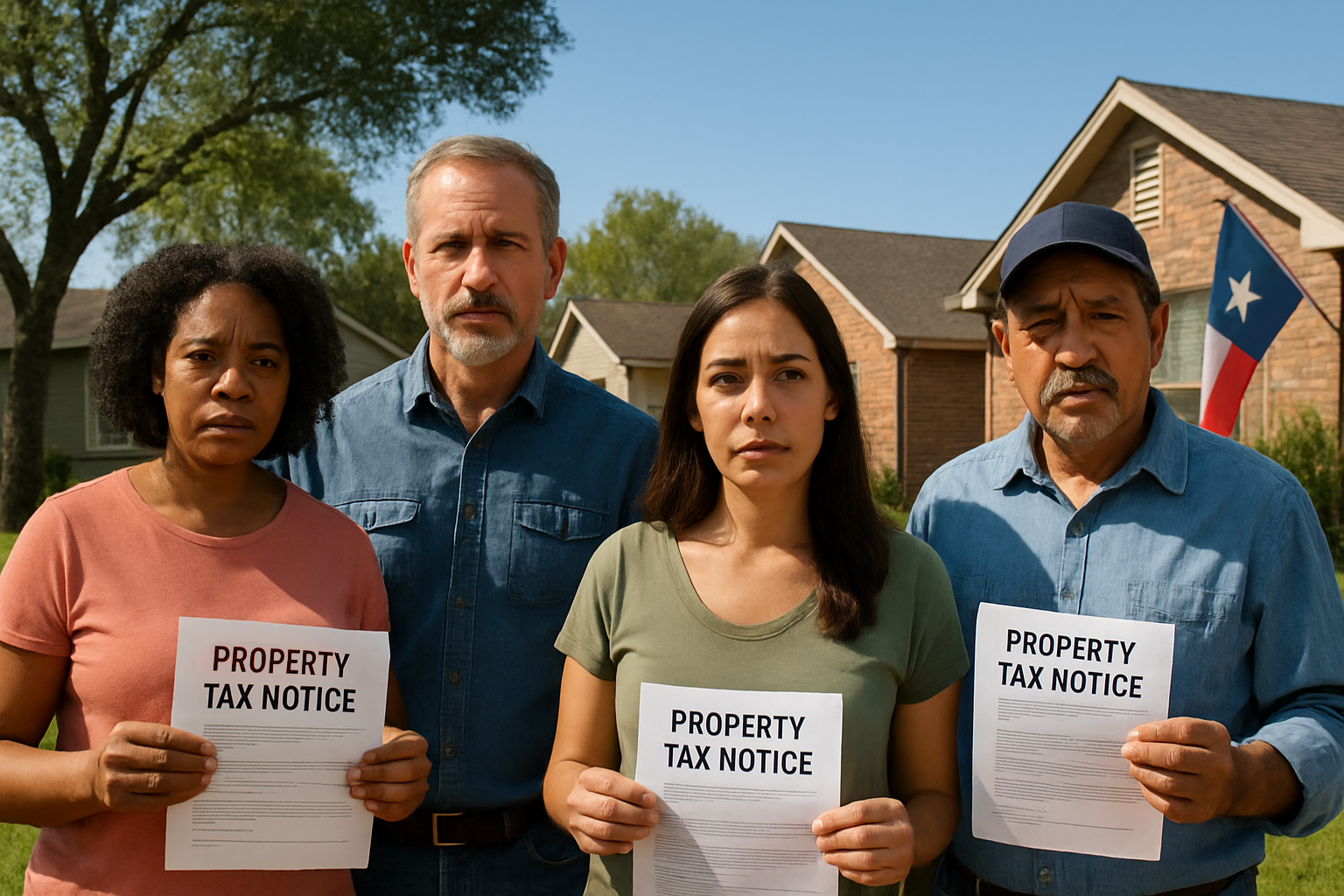
A serious, multi-session path to reduce—and ultimately eliminate—Texas’ reliance on property taxes without hurting working families.
Texas voters approved major property tax reforms in November 2025, including the largest homestead exemption increase in state history. These are meaningful gains — and Texas families deserve every dollar of relief they received. But in fast-growing communities like HD 106, appraisal inflation continues to outpace those improvements, leaving too many homeowners still struggling to keep up.
Real relief is possible only when Texas addresses the structural drivers of rising tax bills: unchecked appraisal growth, local spending increases, and the state’s continued overreliance on property taxes. HD 106 families cannot afford another decade of temporary fixes.
The Issue
The 2025 constitutional amendments raised the school-district homestead exemption from $100,000 to $140,000 for all homeowners and up to $200,000 for seniors and disabled Texans.¹ ² Additional measures strengthened state-funded rate compression and expanded business property exemptions.³ This package is substantial, and it will lower bills for many Texans beginning in the 2025 tax year.
However, the relief package did not fix the core problem: rising appraisals in high-growth regions like Denton County continue to erode savings. In HD 106 communities — Frisco, Prosper, Little Elm, Aubrey, and The Colony — home values routinely outpace the statewide average. Statewide relief is being absorbed almost immediately by rising local valuations and spending, leaving homeowners with bills that still trend upward year to year.
Denton County illustrates the reality: although the county lowered its tax rate to $0.185938 per $100 valuation — the lowest since 1986 — average residential valuations increased approximately 3.68%.⁵ ⁶ For many families, that meant higher county taxes despite a rate reduction. This pattern persists across school districts, cities, and special districts as growth accelerates.
Texas must move beyond short-term fixes and deliver a long-term path that ends appraisal-driven tax inflation once and for all.
Supporting Argument
Even with the historic 2025 reform package, Texas remains one of the most property-tax-dependent states in the nation. Relief from fixed exemptions is meaningful but temporary when appraisals continue to rise faster than wages.⁴ A system where homeowners can see taxes rise during a year of declining tax rates is a system fundamentally misaligned with taxpayer interests.
For families in HD 106, the challenge is magnified by rapid population growth, high demand, and rising service costs. School districts — which still make up the majority of a homeowner’s bill — remain under pressure to expand facilities, hiring, and programming. Without responsible budgeting and real spending discipline, tax bills will continue to rise regardless of the relief packages passed in Austin.
Sustainable property tax reform requires structural constraints on spending and appraisals, transparency for taxpayers, and a long-term effort to transition Texas away from property taxes as its primary means of funding essential services.
Texas must remain committed to this path — not once every decade, but every session.
What I Support
I support a comprehensive, multi-session strategy that protects working families today and creates a long-term path to ending Texas’ reliance on property taxes altogether. This includes:
- A permanent cap on annual appraisal increases to prevent runaway valuation spikes
- Stronger limits on local spending growth tied to population and inflation
- Automatic reduction of tax rates when appraisals rise faster than allowable spending
- Expanded homestead protections to preserve the value of the 2025 relief package
- Full transparency for taxpayers, including ballot-box approval for major spending increases
- Redirecting a portion of Texas’ long-term revenue growth toward property tax compression
- A phased transition plan to gradually replace school M&O property taxes
- A state-level review process to identify excessive local spending or unjustified tax burdens
- Enhanced protections for seniors, disabled homeowners, and veterans to ensure they are never taxed out of their homes
Texas families should not fear rising appraisals, surprise bills, or being priced out of stable neighborhoods. Real relief requires discipline, transparency, and a long-term commitment — not one-time cuts.d focuses on durable, long-term reform over temporary political headlines.


Why This Matters
Texas remains one of the fastest-growing states in the country, and nowhere is that more visible than in HD 106. Growth is good — but growth without restraint drives families out of their homes. When valuations climb year after year, fixed exemptions can only blunt the impact for so long.
If Texas does not address these structural problems, homeowners will continue paying more even when rates fall. Young families will struggle to buy their first homes. Seniors will be forced to downsize or relocate. And working Texans will see more of their paychecks consumed by housing costs they cannot control.
Texas must do better — and with a long-term plan, it can.
Rick Abraham’s Approach
I approach property tax reform with three principles:
relief must be real, relief must be permanent, and relief must protect homeowners from appraisal-driven inflation.
Texas has made progress, but we cannot declare victory while families in HD 106 continue to face rising bills. My approach is disciplined, multi-session, and focused on structural change — not temporary relief cycles that expire every few years.
As State Representative, I will pursue:
- Permanent appraisal caps to stop runaway increases
- Automatic tax rate compression tied to appraisal growth
- A long-term transition fund dedicated to reducing school M&O property taxes
- Mandatory transparency tools so voters control major spending decisions
- A sustainable blueprint to phase out property taxes over time without harming services or raising other taxes
- Protection for seniors, disabled Texans, and veterans to ensure they benefit fully from every session’s reforms
- A requirement that local governments justify spending increases beyond population and inflation growth
Texas needs a multi-session roadmap — not one-time wins. I will deliver the structural reforms needed to protect homeowners today and ensure lasting relief for the next generation.
December 2025
Sources & Data
¹ Texas Proposition 13 — Increase Homestead Property Tax Exemption (2025).
https://ballotpedia.org/Texas_Proposition_13,_Increase_Homestead_Property_Tax_Exemption_Amendment_(2025)
² Texas Proposition 11 — Additional Homestead Exemption for Elderly & Disabled (2025).
https://ballotpedia.org/Texas_Proposition_11,_Increase_Homestead_Tax_Exemption_for_Elderly_and_Disabled_Amendment_(2025)
³ Texas Tribune — Voters Approve Constitutional Amendment Expanding Property Tax Relief (Nov. 4, 2025).
https://www.texastribune.org/2025/11/04/texas-property-tax-vote-constitutional-amendment/
⁴ Kiplinger — Texas Property Tax Relief: What Homeowners Should Know (2025).
https://www.kiplinger.com/taxes/texas-property-tax-relief-what-to-know
⁵ Denton County Tax Rate Announcement — FY 2025–2026.
https://www.dentoncounty.gov/CivicAlerts.aspx?AID=1366
⁶ Denton County 2025 Tax Rate Notice.
https://www.dentoncounty.gov/DocumentCenter/View/11075/2025-Notice-of-Tax-Rate-PDF
⁷ Denton County Property Tax Analysis — Appraisal Growth Data.
https://www.dentoncounty.gov/DocumentCenter/View/441/Property-Tax-Analysis-PDF
⁸ Cross Timbers Gazette — Denton County Budget & Rate Reduction Coverage (2025).
https://www.crosstimbersgazette.com/2025/09/12/denton-county-adopts-budget-that-reduces-property-taxes-increases-project-funding/
⁹ Texas Comptroller — Property Tax Exemptions Overview.
https://comptroller.texas.gov/taxes/property-tax/exemptions/